Pain plus context
Track more than a number. Capture fatigue, flare timing, stiffness, and quick notes when the day changes.

Chronic Pain Tracker
Living with chronic pain usually means the hard part is already happening before you ever open an app. Elly Rise is built to keep logging light enough that the record can survive alongside the rest of daily life.
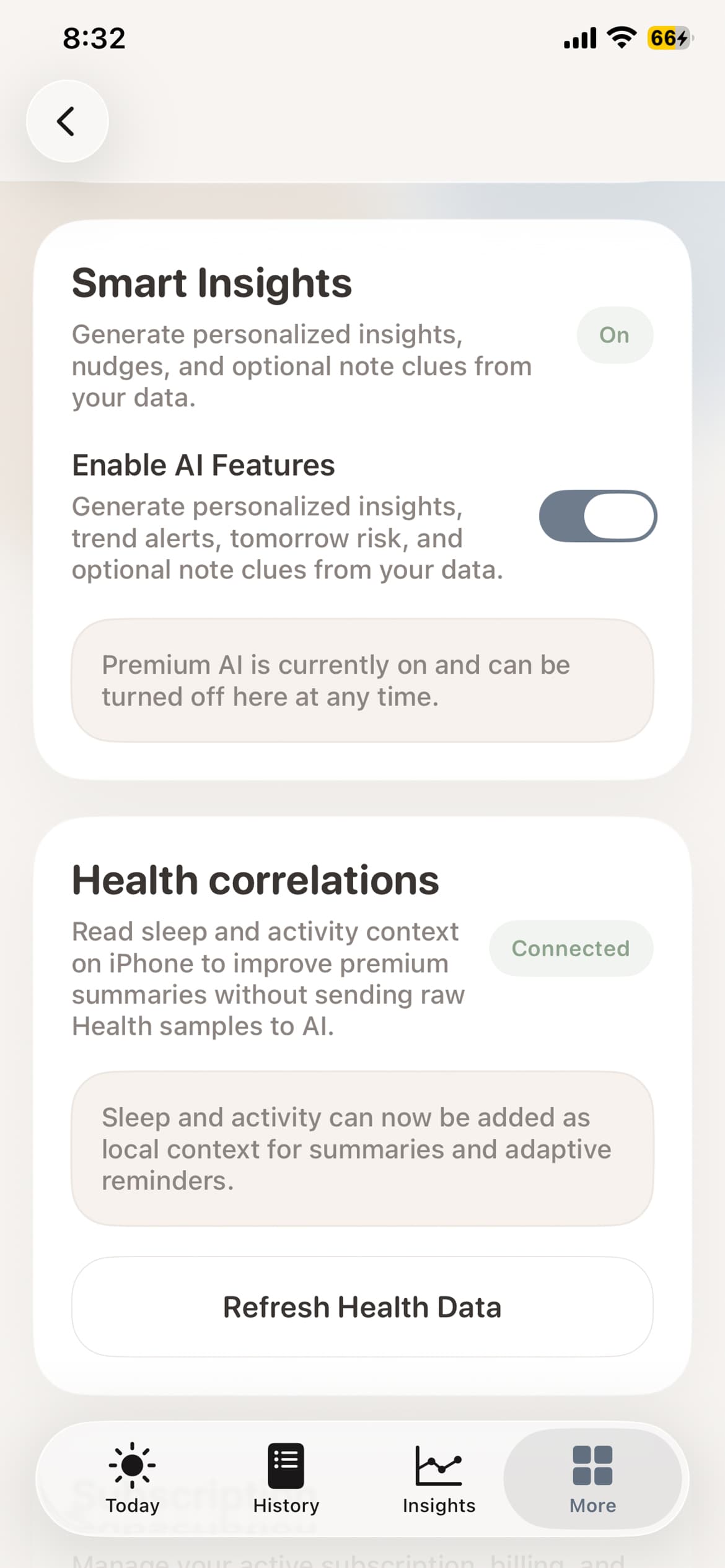
Track more than a number. Capture fatigue, flare timing, stiffness, and quick notes when the day changes.
The routine is designed for low-energy days, when a heavy tracker is most likely to get abandoned.
A lighter daily log gives you a much better chance of remembering what actually happened before the next appointment.
Pain intensity matters, but it is rarely the whole story. Fatigue, stiffness, recovery time, and possible triggers often shape what a day was really like.
Elly Rise helps you keep that surrounding context close, so you can notice whether pain patterns are stable, worsening, or showing up alongside other symptoms.
Many people with chronic pain stop tracking because the app becomes one more demand. If the process feels like paperwork, the record usually breaks down right when the symptoms are worst.
A lower-friction routine makes it more realistic to keep enough information for pattern review without making the tracking habit the center of the day.
Elly Rise is not there to tell you what your pain means. It is there to help you arrive with clearer history when you are talking to a clinician, reviewing a difficult month, or trying to notice what has shifted.
That changes the appointment from vague memory into a more grounded conversation about patterns, treatment response, and what has been hardest lately.
Yes. Chronic pain often overlaps with fatigue, stiffness, or flare cycles, so the tracker is designed to keep those details nearby.
No. It can be useful across different chronic pain conditions as long as the goal is pattern tracking and appointment prep, not diagnosis.
A notes app can work, but it usually becomes harder to review over time. Elly Rise is aimed at making the timeline easier to revisit and discuss later.
Turn daily symptom history into something you can actually use before an appointment.
See the landing page focused on pain, stiffness, and flare patterns in arthritis.
Read the day-to-day logging flow and how reports fit into care conversations.
Ask about app downloads, support, or clinician questions.