Remember the timeline
Keep symptom changes closer to the day they happened, instead of reconstructing everything in the waiting room.

Doctor Visit Prep
Appointments often depend on details that are hardest to remember under pressure. Elly Rise helps you keep enough daily history that you can walk in with a better sense of what actually happened between visits.
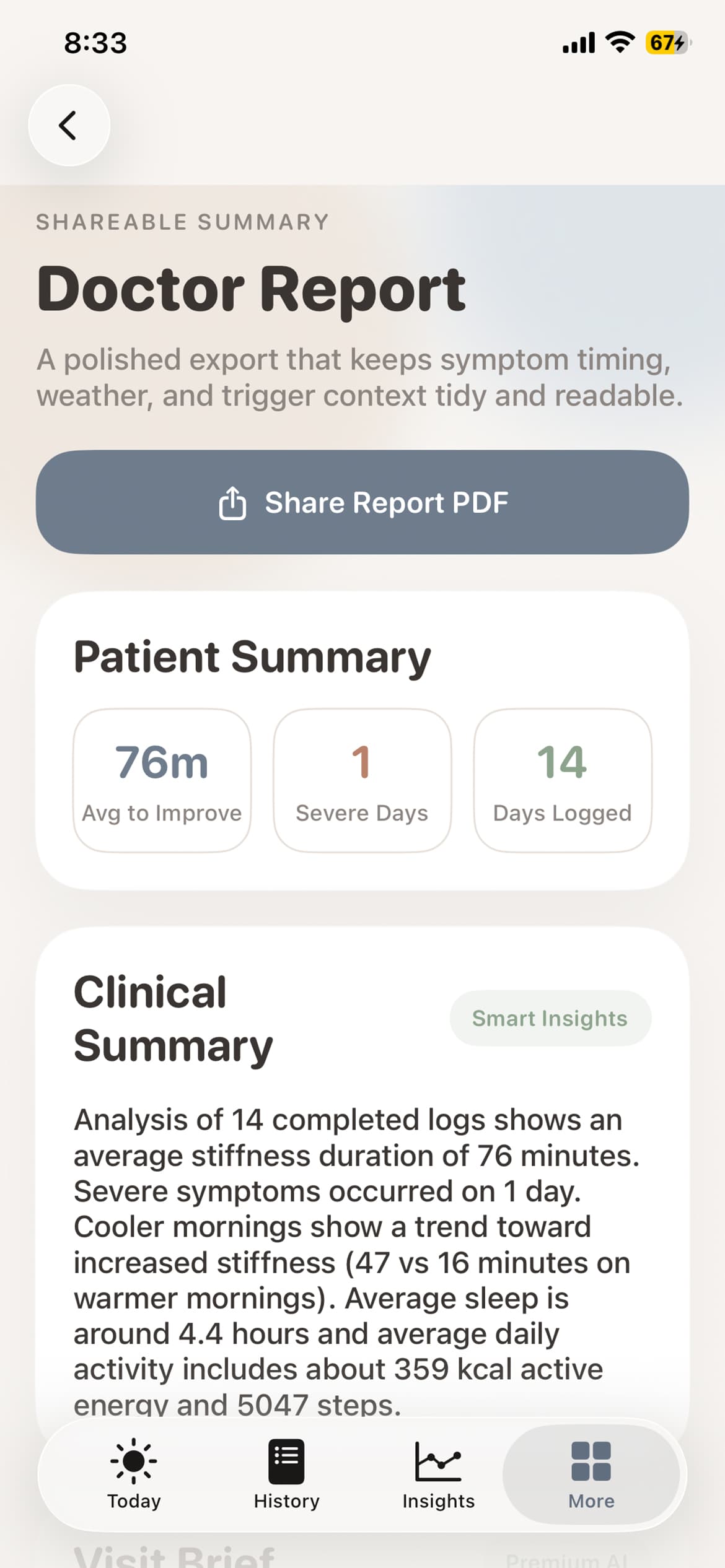
Keep symptom changes closer to the day they happened, instead of reconstructing everything in the waiting room.
Notice whether mornings, flares, fatigue, or treatment changes followed a pattern worth discussing.
Use the tracker to support a better conversation with your clinician, not to self-diagnose.
Most people do not struggle because they failed to pay attention. They struggle because chronic symptoms blur together, energy is limited, and appointments compress weeks of lived experience into a few minutes.
A simple symptom record can make a huge difference. Even basic notes about pain, stiffness, fatigue, or flare timing can help you speak with more clarity and less stress.
Before a rheumatology or chronic pain visit, people often need the same practical questions answered. What has gotten worse? What has improved? How often have flares happened? When is stiffness worst? What are the low-energy days actually like?
Elly Rise is designed to help you gather that history without turning the tracker into the center of your care.
Patients benefit because the record is easier to explain. Clinicians benefit because the conversation can start from clearer history instead of broad recall alone.
That does not mean the app replaces clinical judgment. It means the visit has a better starting point.
Rheumatology is a strong fit, but the same pattern-history problem shows up in pain, primary-care, and follow-up visits too.
No. Even a lightweight record is often much better than starting from memory alone on appointment day.
Yes. It is also useful for clinicians who want to understand how Elly Rise supports better visit prep without requiring an EMR integration.
Read the clinician-facing explanation of how Elly Rise fits into a visit workflow.
See the arthritis-specific page focused on pain, stiffness, and flare history.
Read the pain-tracking page for broader chronic pain search intent.
Find quick answers about privacy, AI, clinicians, and reports.